What Is a Rotary Parking System?
Parking shortages have become a critical bottleneck for urban development across Indian cities. As urban populations grow and car ownership continues to rise, residential buildings, hospitals, commercial complexes, educational institutions, and mixed-use developments are finding it increasingly difficult to provide adequate parking within limited land areas.
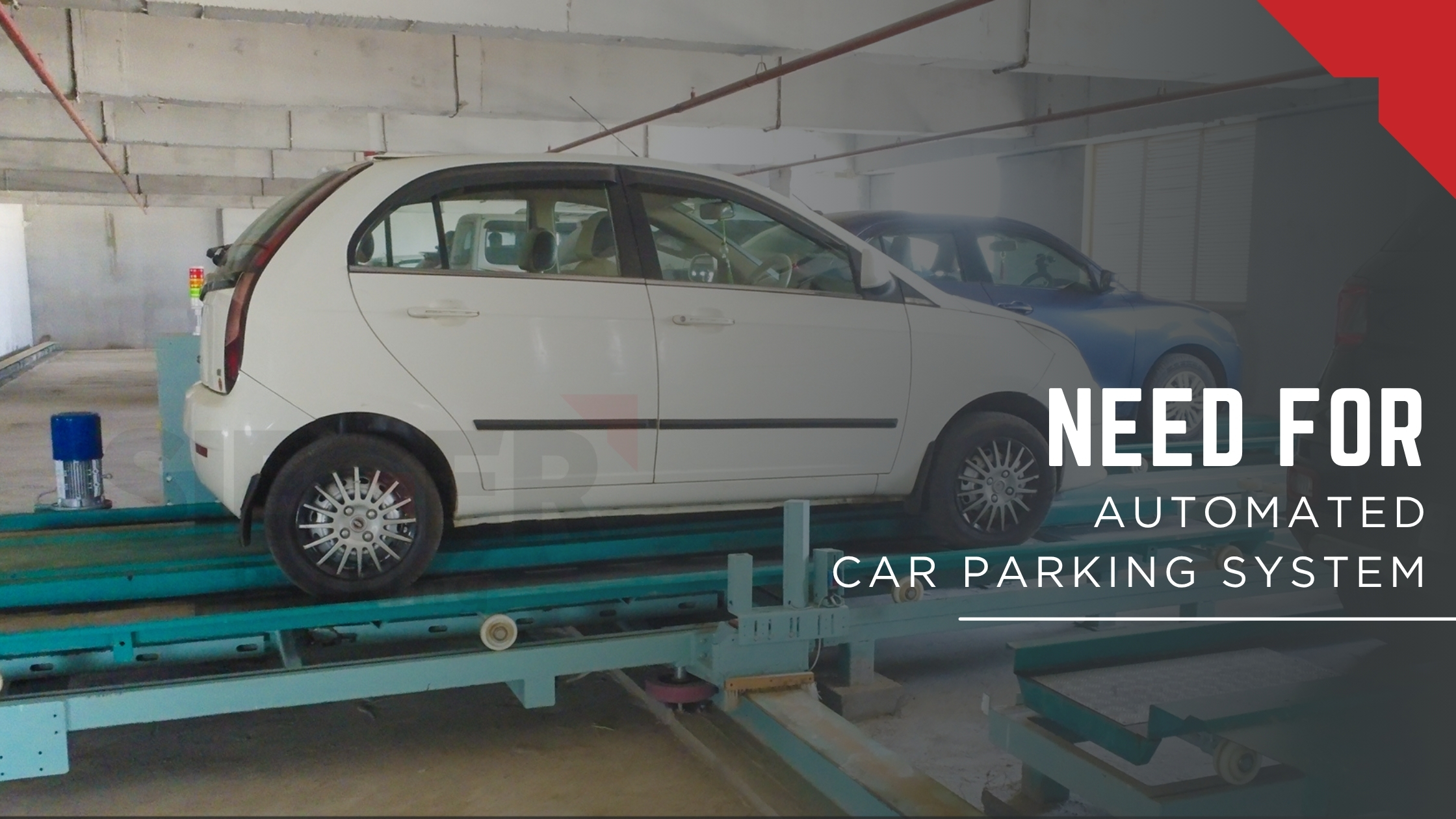
Traditional parking layouts require large amounts of space and often reduce the area available for essential building functions. This challenge has accelerated the adoption of mechanical parking solutions like the Rotary Parking System, offering limitless innovation within limited space
India's Urban Parking Crisis: The Need for Limitless Innovation
India's urban infrastructure is under constant pressure. While cities continue to expand vertically, parking areas often remain limited.
Common challenges faced by developers include:
- Increasing number of cars per household
- Limited availability of urban land
- Rising construction costs
- Stringent parking regulations
- Growing demand for visitor parking
In many projects, parking requirements consume a significant portion of the available site area. This often results in compromises on landscaping, amenities, open spaces, or future expansion opportunities.
How Does a Vertical Rotary Parking System Work?
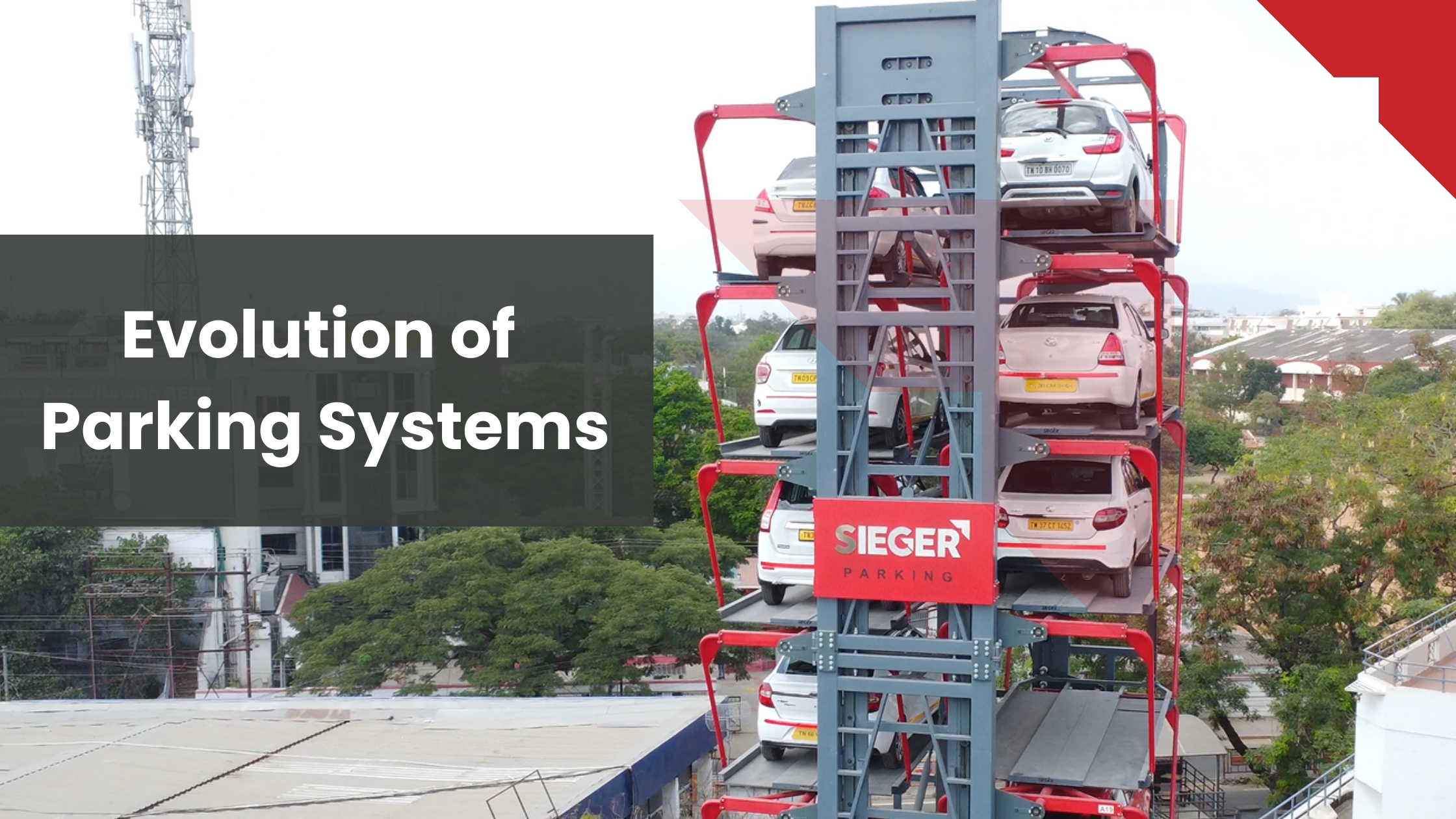
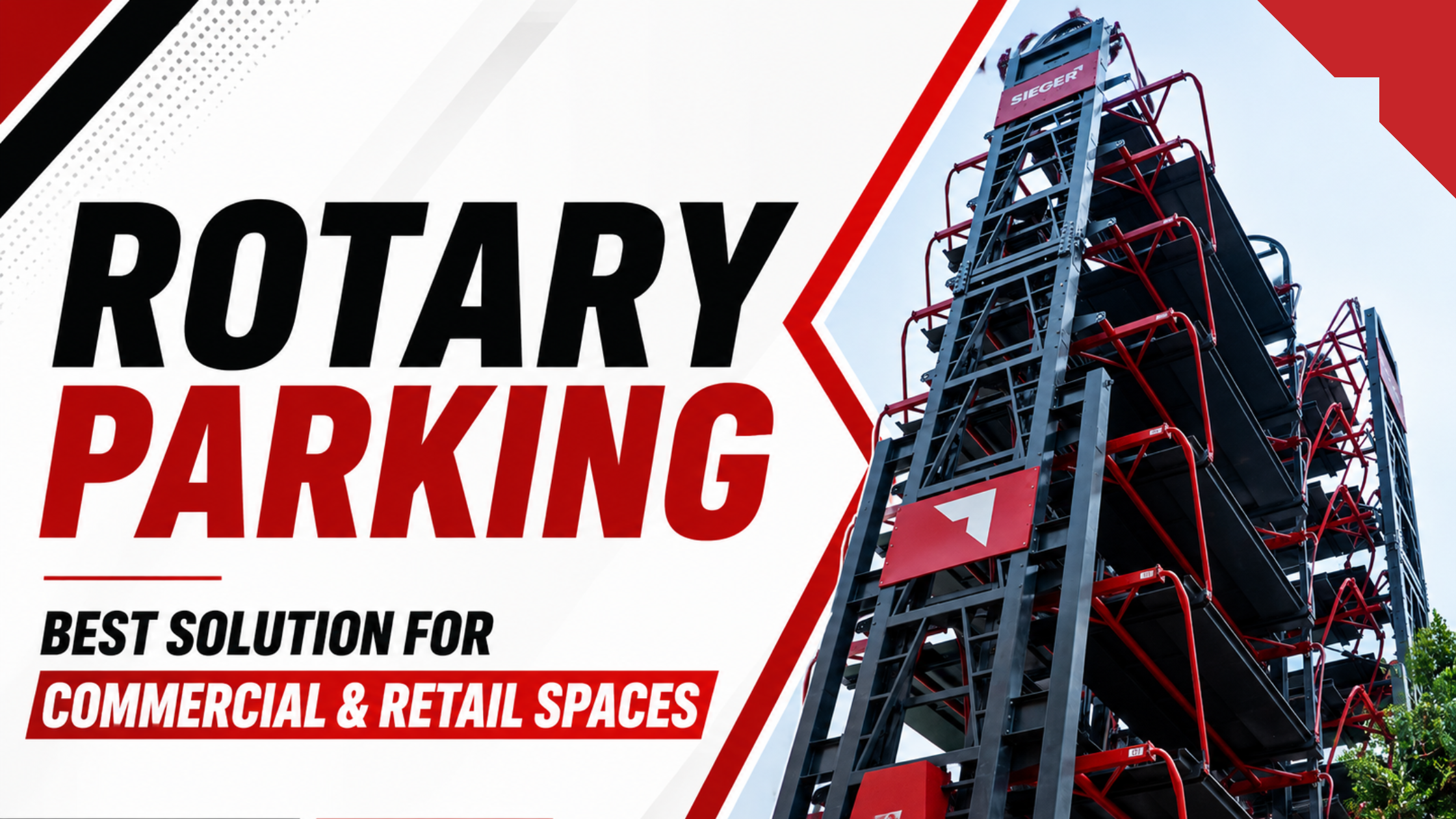
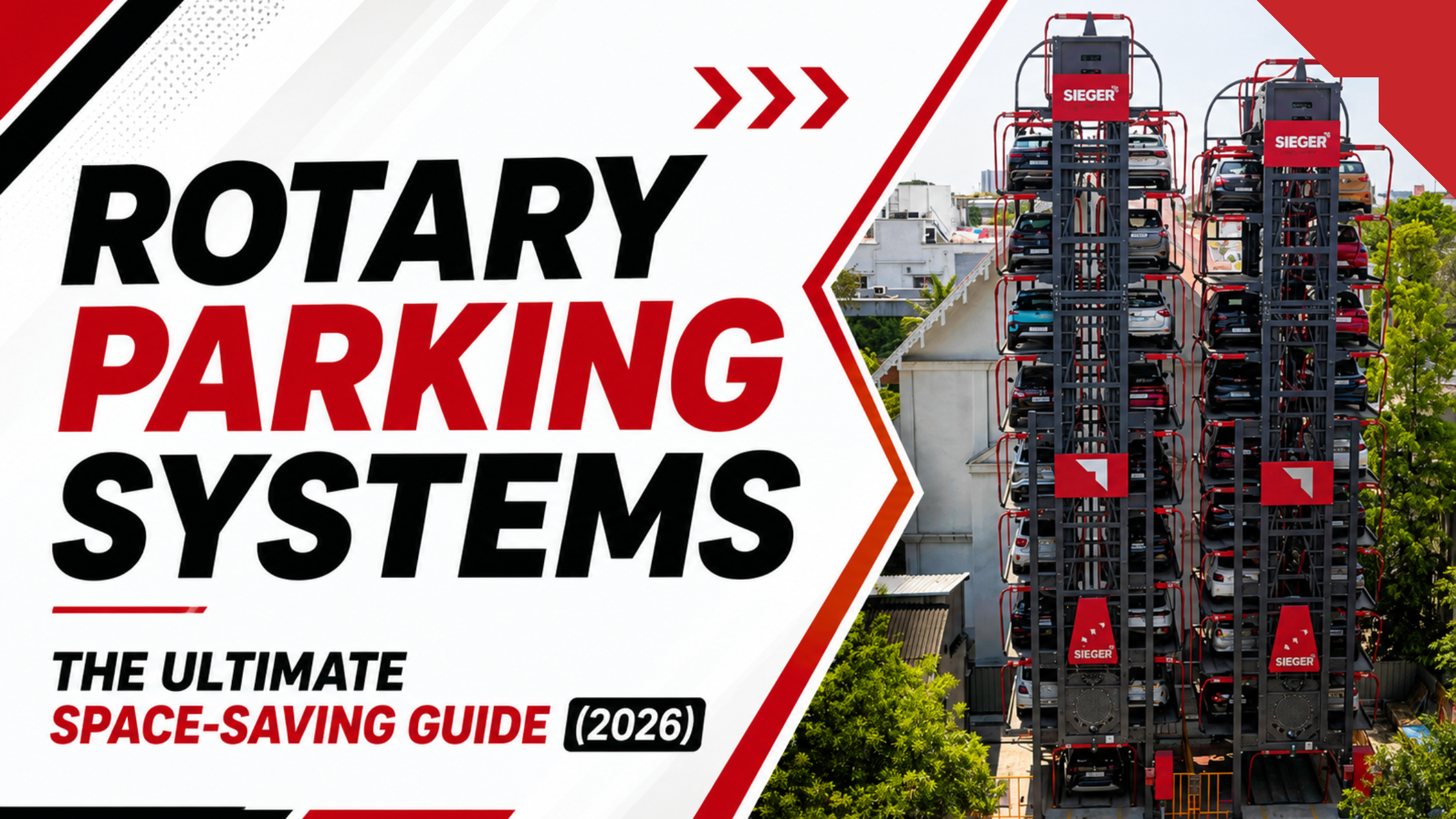
A vertical rotary carousel parking system operates using an automated rotating mechanism that moves car platforms vertically to a ground-level access point for easy entry and retrieval.
The operation is highly user-friendly:
- Car Entry: The driver positions the car on the designated entry platform.
- System Activation: The operator initiates the parking process through the control panel.
- Rotary Movement: The structure rotates vertically and moves the car to an available parking position.
- Secure Storage: The car remains securely parked on its designated platform.
- Retrieval: When the car is required, the system rotates and brings it back to the ground-level access point.
Key Benefits of Rotary Parking Systems
- Maximum Parking Capacity in Limited Space: The system utilizes vertical space efficiently, eliminating the need to expand horizontally.
- Better Land Utilization: Developers can use valuable land for revenue-generating or functional purposes rather than dedicating large areas to parking.
- Reduced Construction Requirements: Rotary parking minimizes the need for extensive basement excavation or large parking structures.
- Organized Parking Operations: Cars are stored systematically, reducing congestion and improving parking management.
- Improved Safety: Cars remain securely positioned on designated platforms throughout the parking cycle.
Rotary vs. Conventional Parking Comparison
| Feature | Rotary Parking System | Conventional Parking |
|---|---|---|
| Footprint Required | ~370 sq. ft. for up to 20 cars | ~3,200 sq. ft. for 10 cars |
| Vertical Space | Highly utilized | Wasted (unless multi-level) |
| Retrieval Speed | Fast (Automated, 1–2 mins) | Slow (Manual searching) |
| Civil Work Required | Minimal foundation needed | Extensive excavation needed |
Target Applications & Real-World Use Cases
The target audience for a rotary parking system includes commercial building owners, office complexes, IT parks, shopping malls, retail centers, hotels, residential apartment developers, housing societies, hospitals, healthcare facilities, government authorities, and smart city projects.
Residential Apartments & Housing Societies
A rotary parking system for apartments helps residential communities increase parking capacity, utilize available space efficiently, and reduce parking disputes. Because rotary parking requires a relatively small footprint, it is particularly suitable for dense urban environments.
Commercial Buildings, IT Parks & Malls
A rotary parking system for commercial buildings offers higher parking density, better customer convenience, and enhanced property utilization. By maximizing capacity without increasing the building footprint, it supports efficient commercial operations.
Hospitals & Healthcare Facilities
Implementing rotary parking for hospitals helps healthcare facilities increase parking availability, improve traffic flow, and enhance the visitor experience. The compact nature of rotary parking makes it especially useful for hospitals operating on constrained sites.
Technical Specifications & Dimensions
A typical rotary parking layout requires approximately 5.2 m in width and 6.7 m in length, with height varying based on the parking capacity selected.
Depending on project requirements, systems can be configured for 8, 10, 12, 14, 16, 18, or 20 cars. According to Sieger Parking's specifications, a system can store up to 20 cars within approximately 370 square feet of footprint area.
Rotary Parking System Cost in India
While costs vary, rotary parking often provides better value compared to acquiring additional land or constructing extensive basement parking.
Factors influencing the cost include:
- Number of parking spaces required
- Site conditions
- Civil work requirements
- Electrical infrastructure
- Customization requirements
Critical Safety Features
Modern rotary parking systems incorporate multiple safety mechanisms designed to ensure reliable operation.
Key safety features include:
- Emergency stop system
- Manual retrieval mechanism
- Mechanical stopper for over-travel protection
- Parking assistance signage
- Convex mirrors for visibility
- Safety fencing around the system
Expert Insights: Best Practices & Common Mistakes
Best Practices
- Conduct a Thorough Site Audit: Always assess soil bearing capacity and wind loads before installation.
- Plan for Peak Hours: In commercial buildings, install multiple smaller units (e.g., two 10-car units) rather than one massive unit to speed up retrieval times during rush hour.
- Routine Maintenance: Implement a strict quarterly lubrication and sensor-check schedule to prevent downtime.
Common Mistakes to Avoid
- Ignoring Car Weight Limits: Failing to account for the increasing weight of modern EVs can strain older system specifications.
- Poor Placement: Installing the unit too close to building walls without allowing adequate clearance for car swing arcs during entry.
Proven Rotary Parking Projects Across India
Several rotary parking systems have been implemented across India, showcasing how the technology can be adapted to different site conditions.
- Rotary Parking in Chennai with 108 Cars
- Rotary Parking in Calicut with 48 Cars
- Rotary Parking in Bangalore with 36 Cars
- Rotary Parking in Tiruppur with 30 Cars
- Rotary Parking in Coimbatore with 12 Cars
Frequently Asked Questions (FAQs)
What is a rotary parking system?
A rotary parking system is a mechanical parking solution that stores cars vertically using a rotating mechanism, allowing multiple cars to be parked within a compact footprint.
How many cars can a rotary parking system accommodate?
Rotary parking systems are available in configurations ranging from 8 to 20 cars, depending on project requirements.
Is a rotary parking system suitable for residential apartments?
Yes. Rotary parking is especially well-suited for dense residential environments where land is limited. It minimizes the footprint required while maximizing the number of available parking spaces.
What are the civil work requirements for installation?
Compared to conventional underground parking, rotary systems require minimal foundation work. A site audit assessing soil bearing capacity and wind loads is recommended before installation.
How long does it take to retrieve a car?
Automated retrieval typically takes 1–2 minutes, making the process significantly faster than manually searching for a car in a conventional parking lot.