What Is a Rotary Parking System?
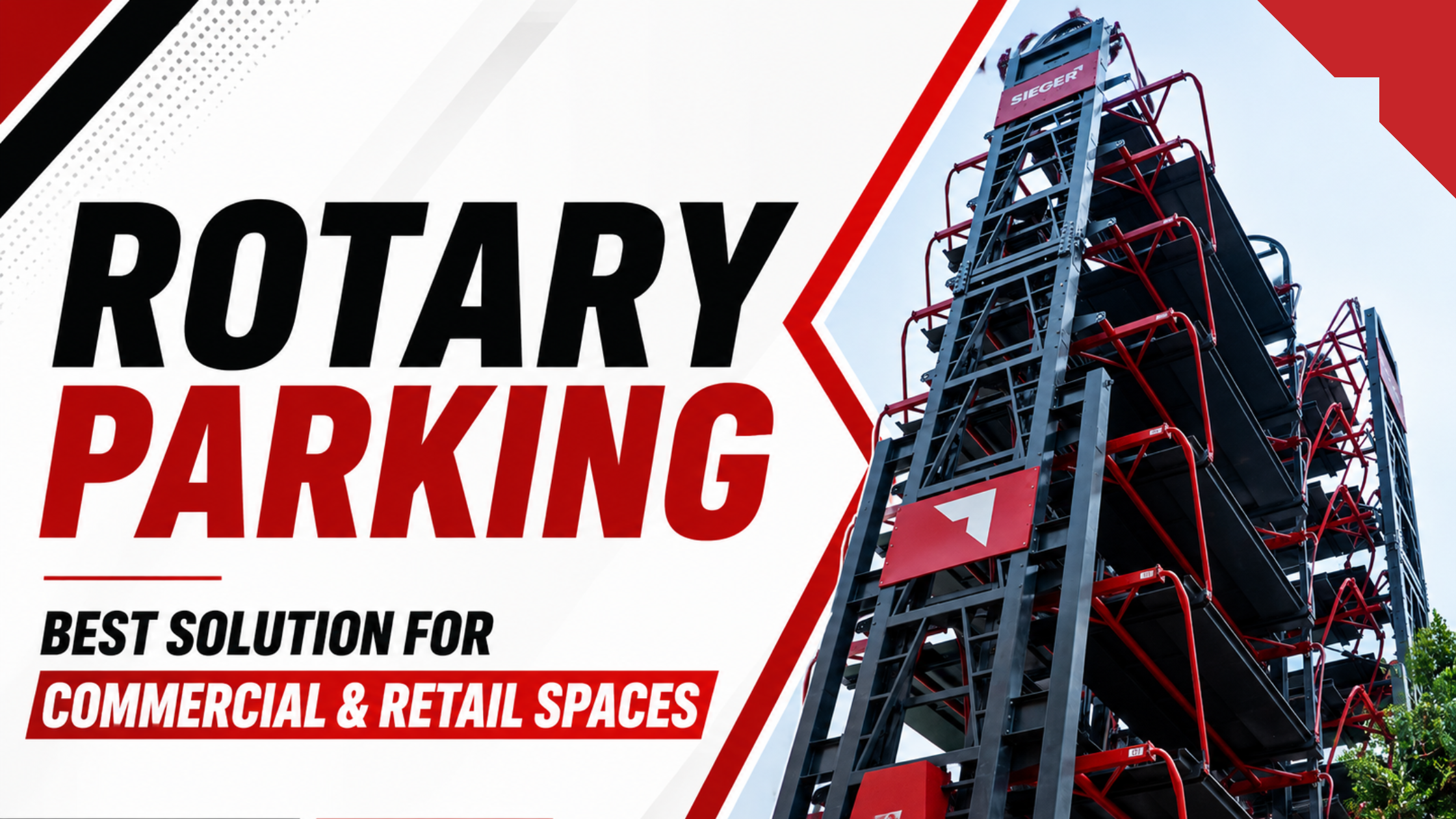
In today's densely populated urban environments, space is a premium asset. For commercial building owners, retail centers, hospitals, and real estate developers, providing adequate parking is a constant challenge. This is where rotary parking offers limitless innovation within limited space. By utilizing vertical space, rotary parking allows retailers to create significantly more parking capacity within a compact footprint while improving convenience for customers and maximizing land utilization.
How Rotary Parking Solves Retail Parking Challenges
Customers often make subconscious decisions based on convenience, and if parking is difficult to find, they may choose a competing business. Rotary parking systems help commercial properties overcome parking limitations without requiring additional land.
Maximizing Space for Jewellery Stores & Premium Retail
Jewellery stores often operate in premium commercial locations where parking availability is limited and customer expectations are exceptionally high. Customers evaluating high-ticket items spend considerable time in the store. Rotary parking helps jewellery retailers improve customer convenience, reduce parking-related stress, and enhance brand perception.
Handling High Volume for Textile Showrooms & Malls
Textile showrooms experience substantial customer traffic, particularly during festive seasons and wedding shopping periods. Family shopping visits often involve multiple cars, creating significant parking demand. Rotary parking accommodates more customer cars and improves parking turnover, reducing congestion during peak hours.
Technical Specifications: Dimensions and Space Requirements
A typical rotary parking installation requires a highly compact footprint of approximately 5.2 metres in width and 6.7 metres in length — roughly 370 square feet, within which up to 20 cars can be accommodated.
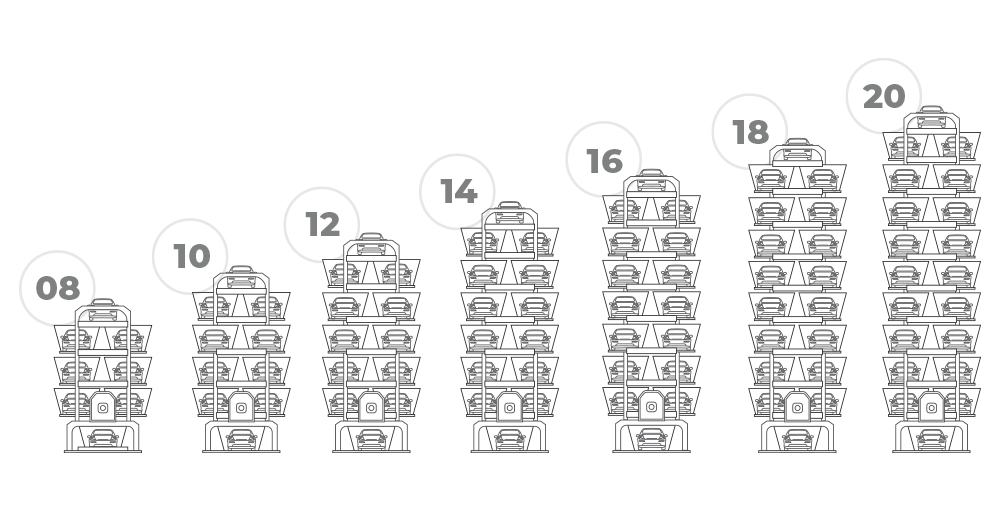
Rotary Parking Systems are available in scalable configurations that accommodate 8 Cars, 10 Cars, 12 Cars, 14 Cars, 16 Cars, 18 Cars, and 20 Cars within a single system.
Integrating Parking Management Systems (PMS)
Modern Rotary Parking Systems can be integrated with a Parking Management System (PMS), allowing businesses to monitor parking utilization and generate operational reports.
The system provides valuable insights, including:
- Daily parking usage and monthly trends
- Peak parking hours and average parking duration
- Number of cars parked and overall occupancy rates
Real-World Rotary Parking Case Studies
Rotary parking systems have been successfully implemented across multiple cities in India.
- Large-Scale Retail: Rotary Parking in Chennai with 108 Cars accommodates significant customer parking demand in a busy commercial environment.
- Textile Developments:Rotary Parking in Tiruppur with 30 Cars increases capacity without requiring additional land.
- Urban Commercial:Rotary Parking in Bangalore with 36 Cars supports space-constrained city environments.
- Growing Markets:Rotary Parking in Kozhikode with 48 Cars highlights the adaptability of vertical solutions in emerging markets.
- Growing Markets:Rotary Parking in Coimbatore with 12 Cars further demonstrates scalability across city sizes.
Rotary Parking vs. Conventional Surface Parking
| Feature | Conventional Surface Parking | Rotary Parking System |
|---|---|---|
| Land Utilization | Valuable commercial land is occupied by parking. | Valuable land can be utilized for business operations. |
| Capacity Expansion | Expansion often requires additional land. | Capacity can be increased vertically. |
| Customer Convenience | Customers may depend on off-site valet parking. | Cars remain closer to the showroom. |
| Retrieval Times | Longer retrieval times during peak periods. | Faster and more organized retrieval. |
| Data Tracking | Limited parking analytics. | PMS-based reporting and insights. |
Frequently Asked Questions (FAQs)
What is a rotary parking system?
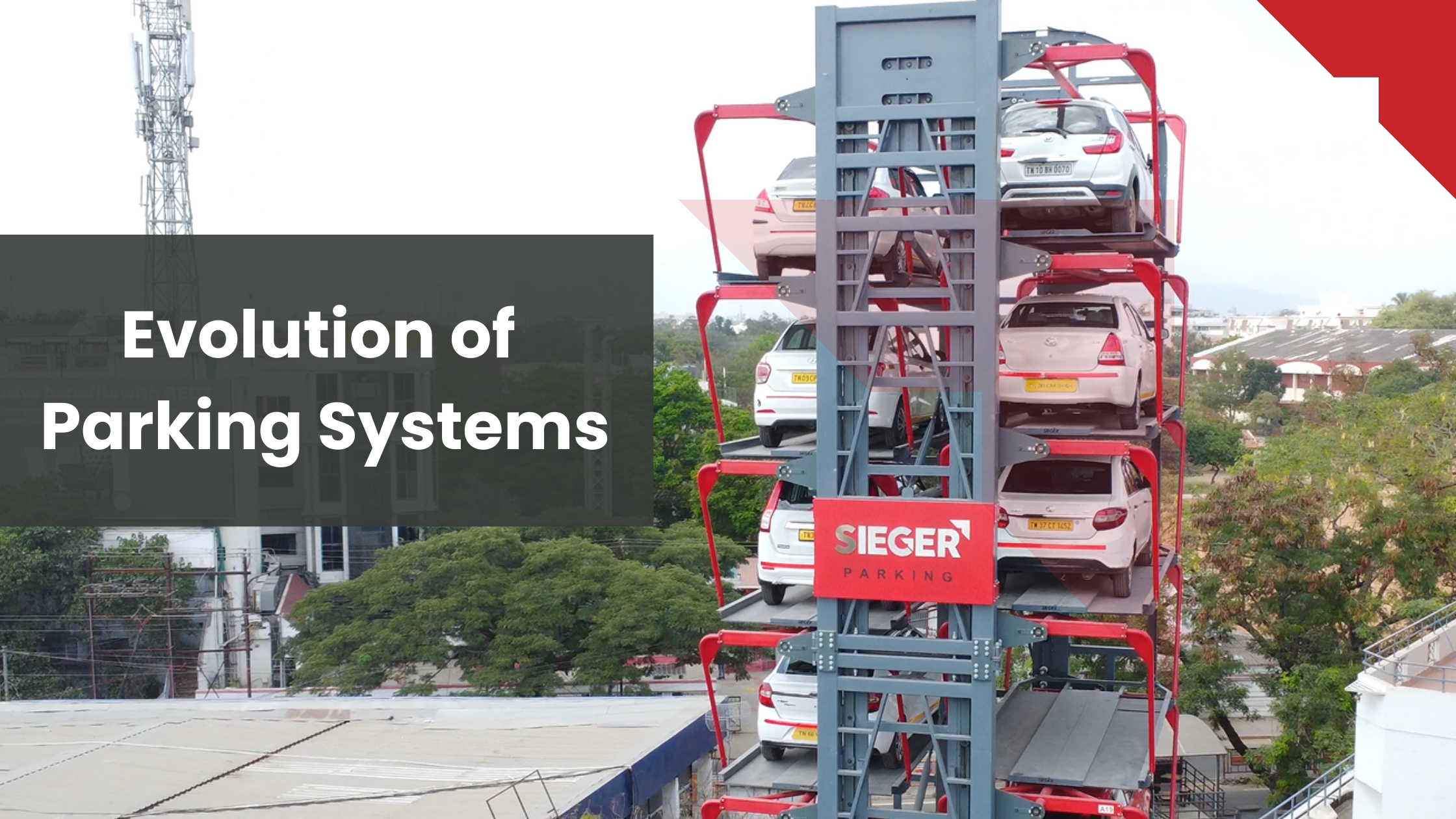
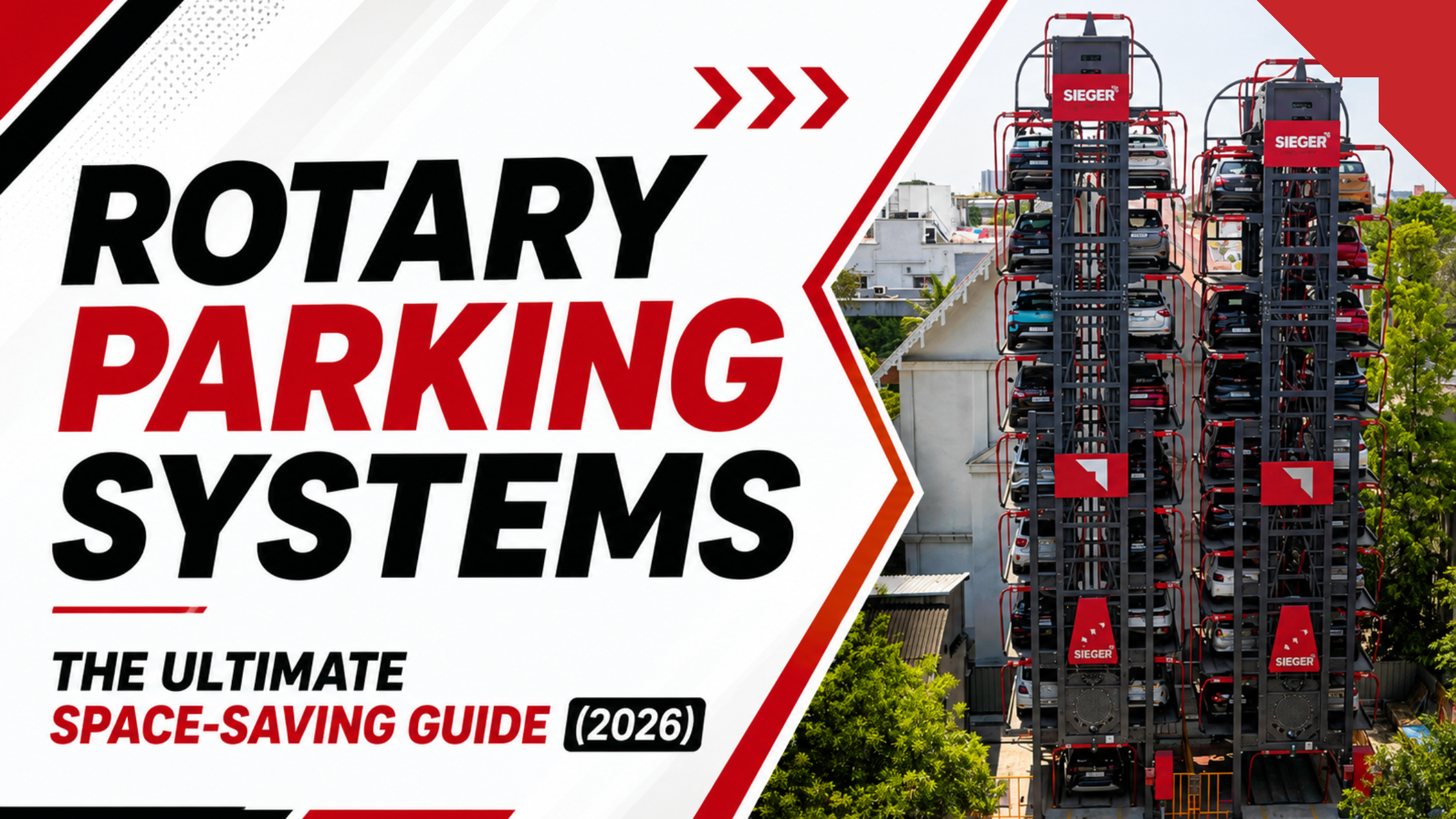
A rotary parking system is an automated mechanical parking solution that stacks cars vertically in a rotating loop, increasing parking capacity within a limited footprint.
How much ground space is required for installation?
A standard system requires a compact footprint of approximately 5.2 metres in width and 6.7 metres in length.
How many vehicles can a rotary system hold?
Configurations are available to hold 8, 10, 12, 14, 16, 18, and 20 cars within a single system.
How does a rotary parking system benefit jewellery stores and retail spaces?
It provides secure, easily accessible on-site parking, which improves customer convenience, reduces stress, and enhances the overall shopping experience.
Does rotary parking reduce valet wait times?
Yes. Because customer cars remain within the premises rather than being driven to off-site locations, retrieval times are generally shorter.
What determines the cost of a rotary parking system?
The cost depends on parking capacity, site conditions, civil work requirements, electrical infrastructure, installation complexity, and customization.
Why is surface parking considered a "hidden cost"?
Surface parking occupies valuable commercial land that could otherwise be utilized for additional showroom area, product displays, or revenue-generating activities.