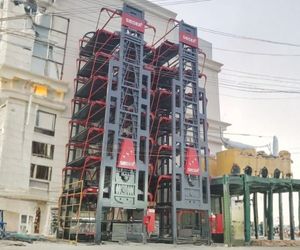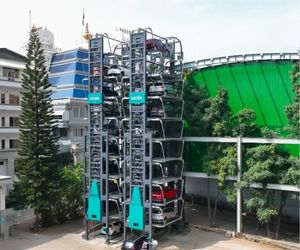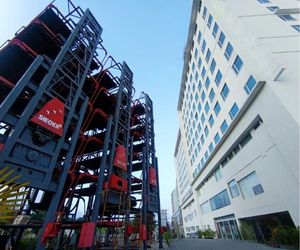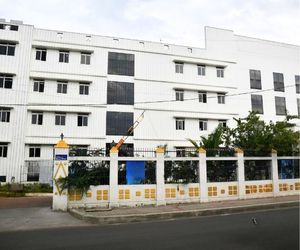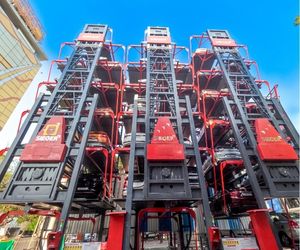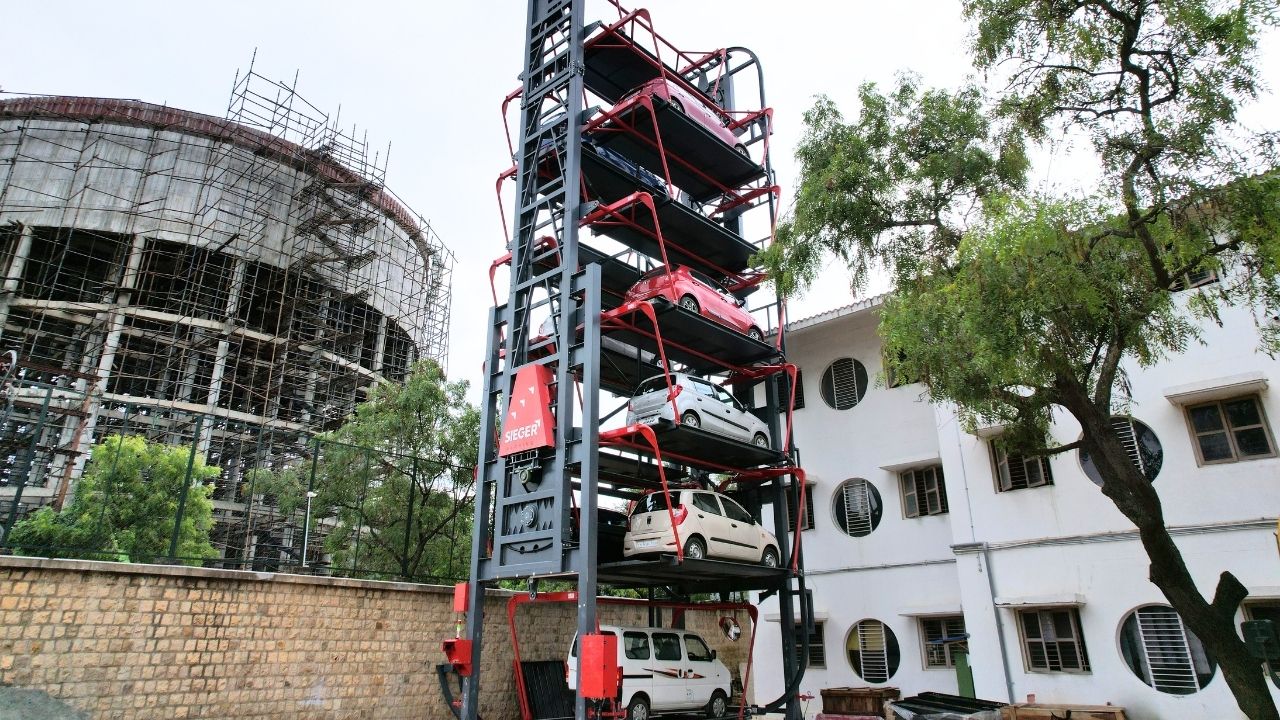
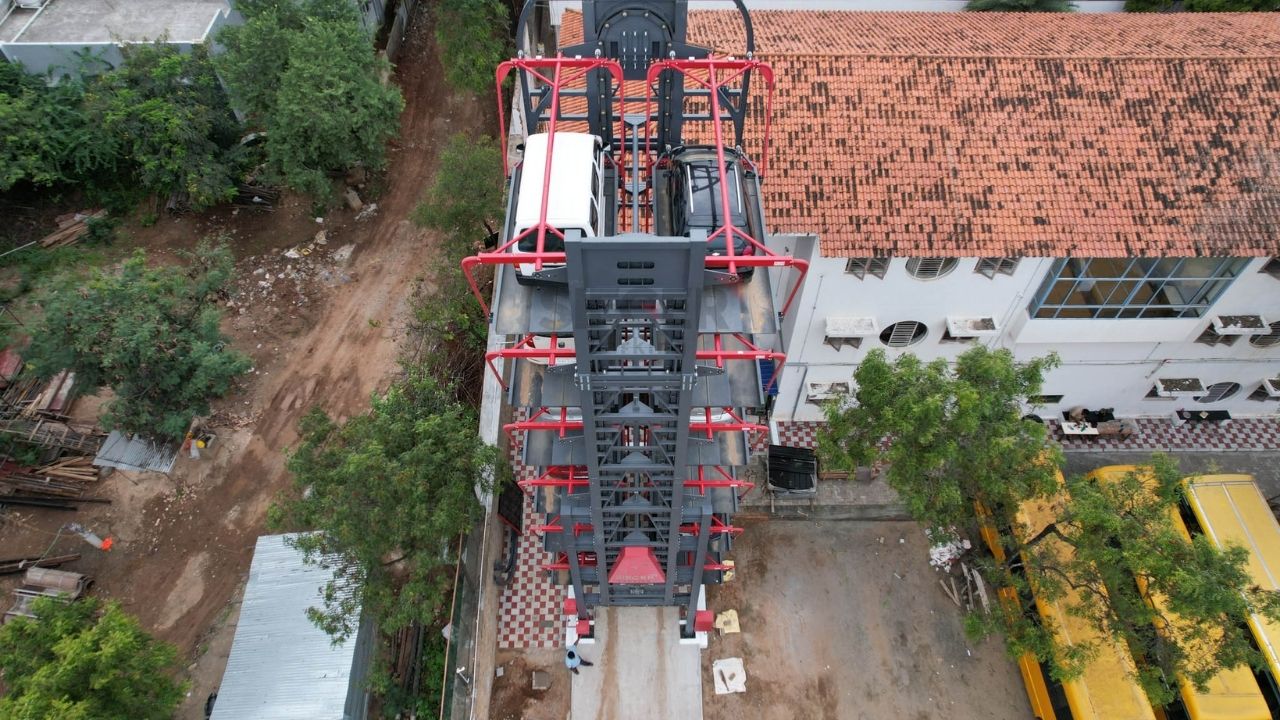
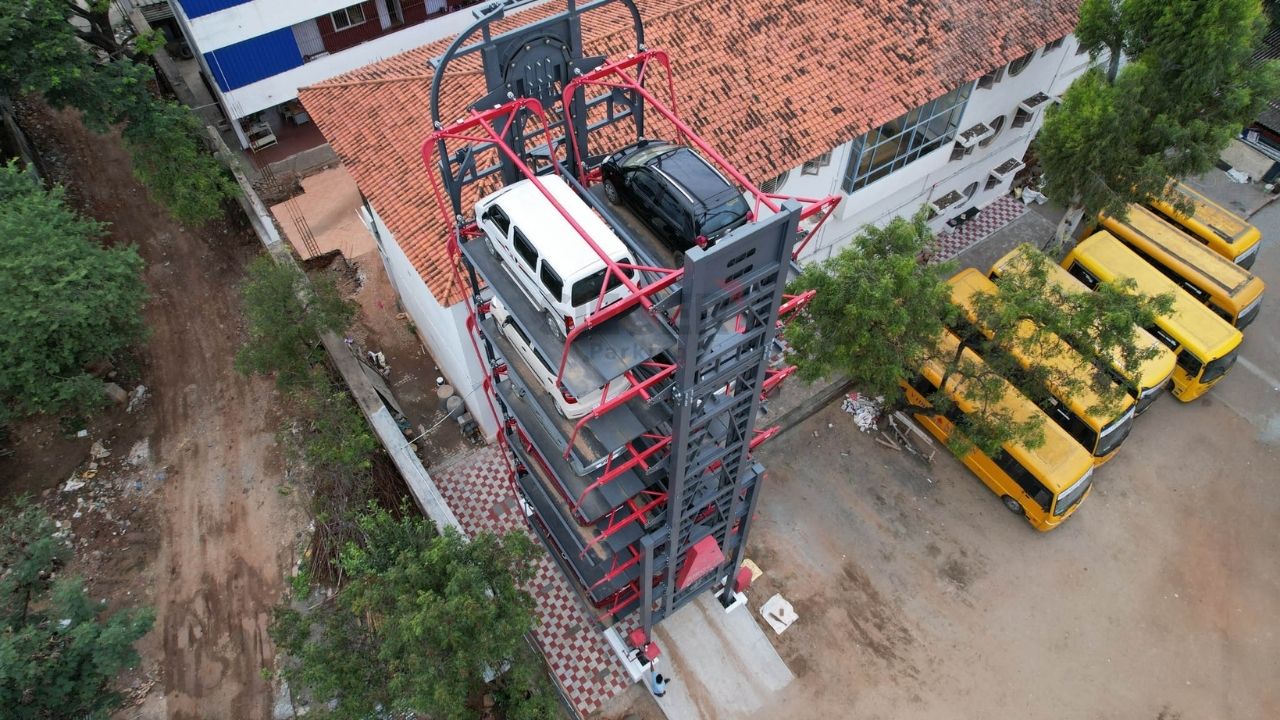
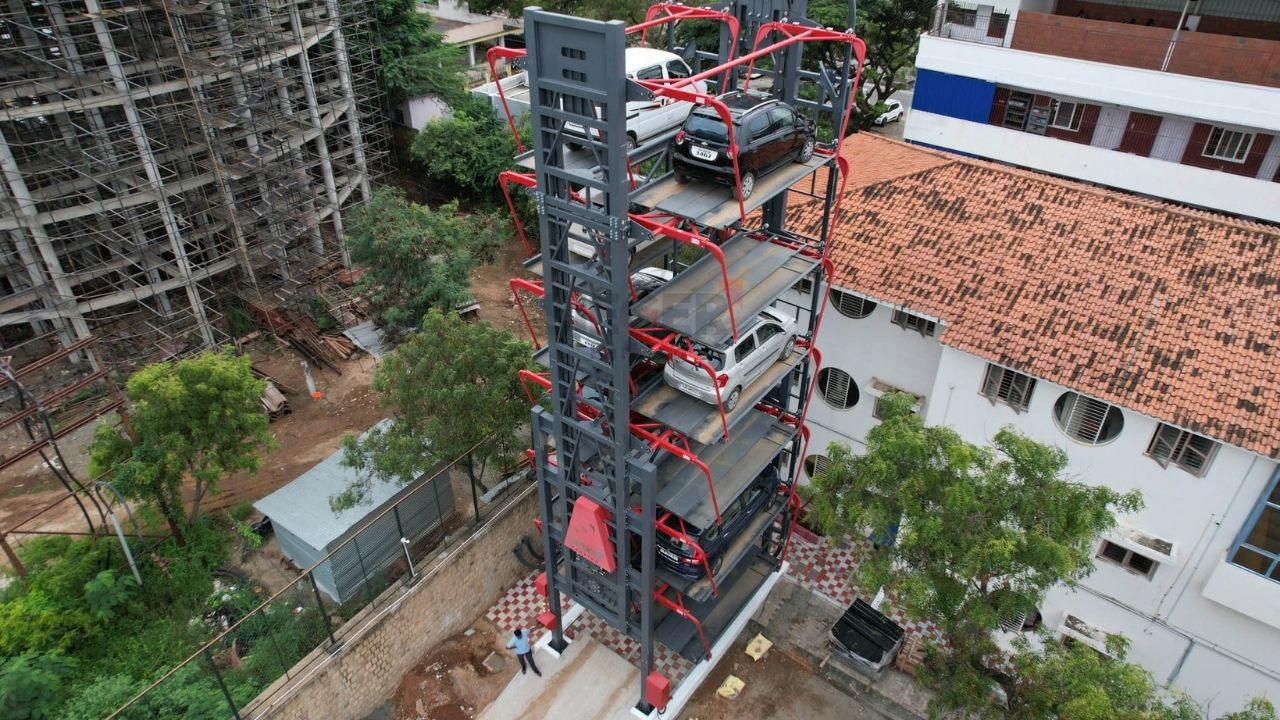


The parking challenge is not exclusive to shopping centres, hospitals, or large residential complexes. Educational institutions across Tamil Nadu are increasingly confronting the same pressure. As vehicle ownership rises among faculty, administrative staff, and parents, schools and colleges find that their campuses were simply not designed with enough parking in mind. A Coimbatore educational institution recognised this early and installed a 12-car rotary parking system from Sieger Parking, demonstrating that structured parking solutions have a clear and practical role in the education sector.
This project signals a broader shift in how educational institutions are thinking about their infrastructure. Parking is no longer seen as a concern only for commercial or large-scale developments. Schools and colleges are now understanding its value as part of a well-functioning campus.
Educational campuses in Coimbatore, particularly those established over several decades, were built at a time when staff and parent vehicle ownership was far lower than it is today. The campus layout prioritises classrooms, laboratories, sports areas, and student facilities. What remains for parking is often limited to a small patch of open ground that quickly becomes inadequate during morning drop-off, evening pickup, and on days when parent meetings or institutional events bring additional vehicles onto the site.
A 12-car rotary system addresses this without requiring the institution to sacrifice any part of the campus that serves students directly. The vertical footprint of the rotary system occupies a fraction of the ground area that 12 conventional parking bays would consume, allowing the institution to add meaningful parking capacity while keeping every other part of the campus intact.
Beyond capacity, the rotary system brings order to what is often one of the most chaotic parts of a school or college day. Vehicles parked informally across open ground create obstructions, generate disputes among staff, and can create safety concerns when parents and students are moving through the same area at the same time. A clearly structured 12-bay system eliminates that ambiguity. Every vehicle has a defined space, access routes remain clear, and the campus entrance operates smoothly at the start and end of each day.
Educational institutions also operate with lean administrative teams who cannot dedicate significant time to managing parking. The rotary system requires minimal supervision. Once vehicles are allocated their bays, the system manages itself, freeing staff to focus on the work of running the institution rather than resolving parking disputes at the gate.
Parking solutions for educational institutions need to be compact, safe, easy to manage, and compatible with a campus environment. For this Coimbatore institution, the rotary system delivered on every one of those requirements:
• Compact vertical footprint that preserves the campus area used by students and staff
• 12 clearly defined bays that bring order to faculty, staff, and parent parking
• Eliminates informal and obstructive parking that creates safety concerns on campus
• Simple operation that requires no specialist training from administrative staff
• Low day-to-day management overhead, allowing staff to focus on institutional priorities
• Reliable performance during high-traffic periods including morning arrival, evening departure, and parent event days
• Durable mechanical design suited to daily use over a long service life
• Demonstrates the institution's commitment to a well-organised and professionally managed campus
The Coimbatore installation makes an important point. Parking is not a problem that belongs only to retail, commercial, or large residential developments. Educational institutions, whether schools or colleges, face the same gap between available space and growing demand. This project shows that a rotary parking system can serve a campus environment at a scale as modest as 12 cars, making it accessible to institutions of virtually any size.
For school and college administrators across Coimbatore and Tamil Nadu who are managing parking pressure on fixed campuses, this project is a reference point. It demonstrates that the solution does not require large budgets, major construction, or significant disruption to the campus during installation. A compact, well-chosen rotary system can resolve the problem cleanly and permanently.
As vehicle ownership continues to rise and educational institutions face growing expectations around campus facilities and organisation, structured parking will become an increasingly standard part of how schools and colleges present themselves to parents, staff, and the wider community. The Coimbatore project positions Sieger Parking as a partner that understands these needs and can deliver at any scale.
Our projects highlight the seamless integration of automated and semi-automated systems designed to optimize space, improve efficiency, and deliver unmatched convenience. Discover our wide range of parking solutions.