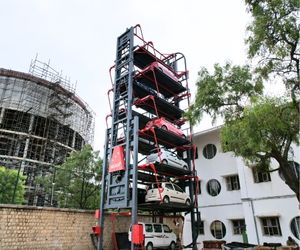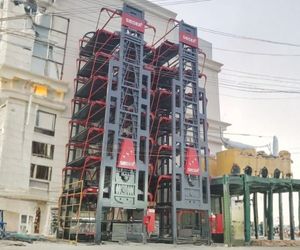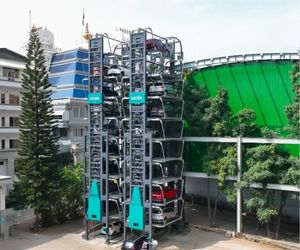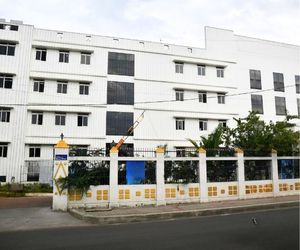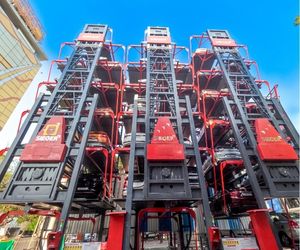
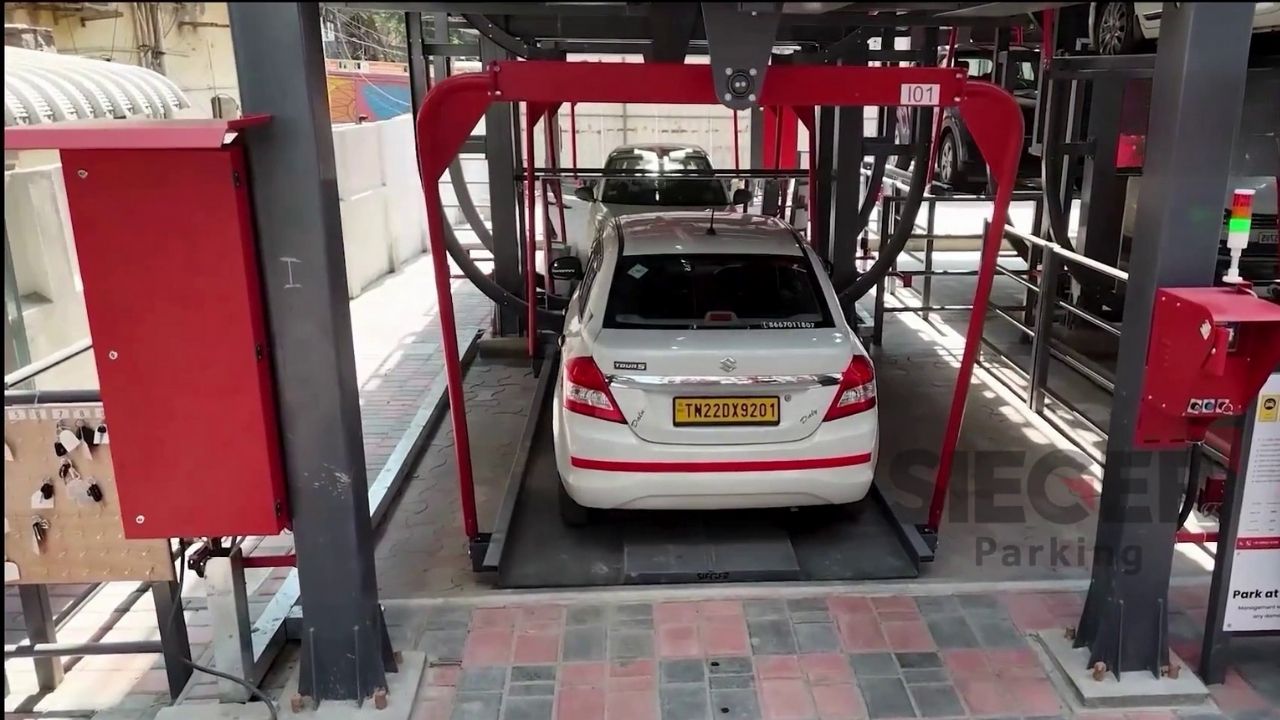
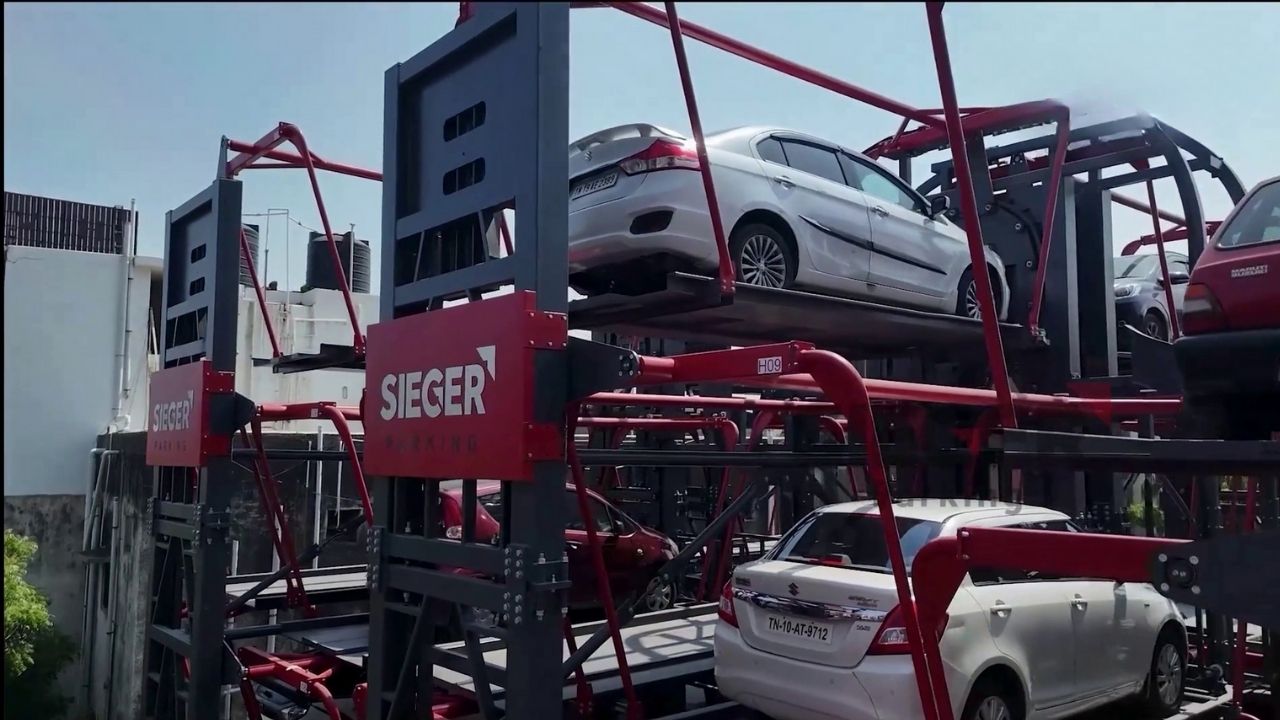



Parking at a hospital is not a convenience. For patients arriving for treatment, families accompanying loved ones, and medical staff reporting for shifts at all hours, the ability to park quickly and without stress is part of the care experience. A hospital in Chennai recognised this and commissioned Sieger Parking to install a 36-car rotary parking system, addressing the site's parking constraints without compromising on the speed and reliability that a healthcare environment demands.
This project demonstrates how rotary parking can serve one of the most operationally demanding settings in the built environment, where the margin for delay, confusion, or system failure is exceptionally low.
Hospitals in Chennai operate on plots that were often planned decades before current vehicle ownership levels were anticipated. The available ground area is committed to clinical facilities, emergency access routes, ambulance bays, and patient drop-off zones, leaving little room for conventional surface parking. A 36-car requirement on such a site would be difficult or impossible to meet through conventional means without removing space that serves a direct clinical function. The rotary system resolved this by delivering the full parking count within a compact vertical footprint, keeping all critical ground-level access routes clear and unobstructed.
A hospital parking facility operates around the clock and across a wide range of users. Patients may be in pain or distress. Families may be anxious or unfamiliar with the area. Staff arriving for early morning or late night shifts need to park and move quickly. The system serving all of these users has to be reliable at every hour, simple enough for anyone to operate on their first visit, and fast enough that no one is left waiting in a moment of urgency. Sieger Parking's rotary system is designed for exactly this level of operational consistency, with a retrieval process that is predictable and straightforward regardless of the time of day or the condition of the user.
Parking disputes and blocked access are particularly disruptive in a hospital setting, where an obstructed driveway or a vehicle in the wrong position can interfere with emergency operations. The rotary system assigns each vehicle a defined position within the carousel, removing the ambiguity of open parking and ensuring that no vehicle can occupy a space that blocks access to another. This reduces the management burden on hospital administration and removes a category of risk that conventional parking arrangements routinely create in healthcare environments.
Rotary parking is particularly well suited to healthcare facilities where site constraints are significant, operational reliability is non-negotiable, and the range of users is broad. For a hospital in Chennai, it delivers on the criteria that matter most:
• Maximum parking capacity within a minimal ground footprint, keeping clinical access routes clear
• Round-the-clock operational reliability suited to a 24-hour healthcare environment
• Simple retrieval process accessible to patients, visitors, and staff of all ages and abilities
• Fast cycle time that minimises wait for users who may be under physical or emotional stress
• Eliminates parking disputes and blocked access that can interfere with emergency operations
• Reduces daily parking management burden on hospital administration and security staff
• Mechanically robust design with low downtime and straightforward maintenance requirements
• Supports sedans, hatchbacks, and standard SUV dimensions covering the full range of visitor vehicles
The Chennai hospital installation is a strong reference point for healthcare facilities across Tamil Nadu that need to resolve parking constraints without affecting the space and access routes that clinical operations depend on. It shows that a 36-car rotary system can be installed and operated effectively in one of the most demanding built environments, serving a diverse and often vulnerable group of users every day.
For hospital administrators, healthcare developers, and medical institution planners considering their parking options, this project demonstrates that rotary parking is a credible solution at the healthcare scale. It is not limited to commercial or residential applications. It can be configured, installed, and managed within the specific constraints and expectations of a functioning hospital.
As Chennai's healthcare sector continues to expand and existing hospital sites face growing pressure on their available space, the ability to add structured, reliable parking capacity without extending the building footprint becomes increasingly valuable. The rotary system delivers that capacity where it is needed most.
Our projects highlight the seamless integration of automated and semi-automated systems designed to optimize space, improve efficiency, and deliver unmatched convenience. Discover our wide range of parking solutions.